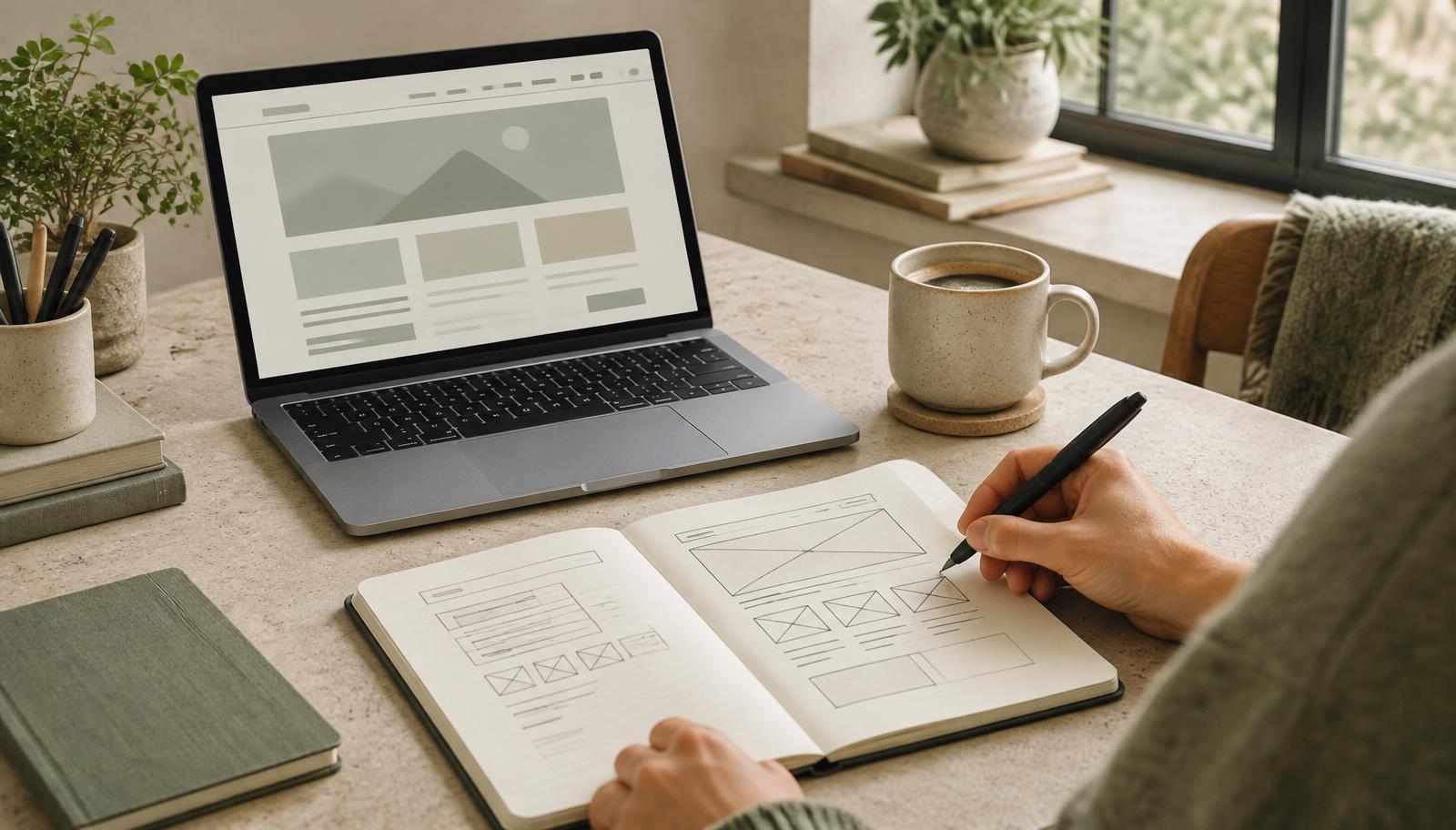
Start with one clear headline
Your headline should tell visitors what you do, who it's for and, if you're local, where. Compare "Quality you can trust" with "Plastering and rendering across Surrey, Sussex and Hampshire". The second tells a visitor instantly whether they're in the right place, and it helps search engines too.
Add a short supporting line
Underneath, add one or two sentences that expand on the headline: what makes you different, how long you've been doing it or what customers can expect. Keep it short and specific.
Make the next step obvious
Decide the one action you most want visitors to take, such as calling, requesting a quote or booking, and make it the main button near the top of the page. Put your phone number where it's easy to spot, especially on mobile.
Show proof early
Visitors want reassurance before they get in touch.
- Reviews or a short quote from a happy customer
- Accreditations, memberships and qualifications
- Photos of your real work, team or premises
- The number of years you've been in business
Explain your services simply
List your main services in a few words each, with a link to a page for each one. Your homepage should give an overview, not every detail.
Answer the questions customers always ask
Think about what people ask on the phone: Do you cover my area? Roughly how much does it cost? How soon can you start? Answering these on your homepage saves time and builds confidence.
Write the way you speak
- Talk to the reader with "you" rather than only "we"
- Use short sentences and everyday words
- Avoid jargon and buzzwords
- Read it out loud; if it sounds odd, rewrite it
A simple homepage structure
If you're starting from scratch, this order works well for most small businesses:
- Headline, supporting line and main button
- A short trust strip, such as reviews, accreditations or years in business
- Your main services
- Why customers choose you
- Examples of your work
- Reviews
- The areas you cover
- A final call to action with your contact details
Common mistakes to avoid
- Opening with "Welcome to our website"
- Long blocks of text that nobody reads
- Generic stock photos instead of your real work
- Too many buttons competing for attention
- Hiding your phone number or contact details
The bottom line
A good homepage answers three questions quickly: what do you do, can I trust you, and what should I do next? Get those right and the rest of your website has a much easier job.